
Sommnath Roy sprawled his enormous bulk on the chair and propped his feet on a wicker stool. There was nothing like taking a lazy nap on the balcony after a salubrious meal of rice and fish in tongue-scalding sauce made of garlic, chili and onion paste. He could still feel the fiery taste on his tongue. He looked at the mound of his belly undulating like a swelling wave as he took steady breath. His wife often badgered him to reduce his intake of rice as the starch was ballooning up his belly, but he didn’t bother to listen to her. What the heck, he enjoyed his rice and fish. The phone rang. Slicing the air its shrill sound reached straight to his ears. He heaved his body from the chair, cursing the person who rang at this hour.
“Helllo,” he said, trying hard not to sound irritated.
“Baba, it’s me, Shona.” Of course, he knew who she was; she need not introduce herself. He knew it just the moment when the voice mouthed the first syllable. He knew it was none other than his only daughter calling from England. Gone was the sleep in his eyes, all traces of irritation disappeared, the voice radiated so much warmth that he felt sluggishness melting away from his body. His heart was pulsating with love, he wanted to reach out to her and smother her with wet kisses and watch her puckering her lips in disgust, the way she used to when she was baby, but he knew she was a woman now and he had to keep his distance and his emotions lidded.
“How is my darling daughter? You must be on your way to office now. Are you wearing your scarf? You always get a sore throat in cold.”
“Yes, Baba, I am properly clothed. And what fish did you have for lunch today?”
“Oh, I angled a prize catch today. As I walked into the fish market, my eyes fell on this big carp fish, the length of my hand. Its scales looked like polished silver and its eyes were glassy as marbles. I wanted to get my hands on it at once but I didn’t want to look desperate. I haggled for five minutes, and as usual the fish monger gave in. When he was cutting it into pieces, I could see its pink and soft flesh. Your Ma made a curry with onion paste which tasted sublime.”
His rambling was cut short by his daughter. “Baba, I want to tell you something.”
“Sorry, Sorry. Yes, what is it?”
“I met someone here. And I really like him a lot.”
The hairs on his hands stood stiff like needles and for some moments he thought his heart was not in his chest anymore but plummeted to the ground like roller coaster.
“Baba, you there?”
“Is he English?”
“No, Baba. He is an Indian and a Bengali. They are from Kolkatta, but he has been living in England for many years. I wanted to come home next month and I was thinking of bringing him along.”
“Did you say he is a Bengali? No worries bring him home. I will ask your Ma to make an elaborate meal for him. Oh, we will have so much to talk about; literature, music and food.”
“But Baba…
“Don’t worry, no matter where a Bengali lives his interests are always the same. Now you dash off to work. I need to share this piece of good news with your mother,” he said.
He was aghast when his daughter decided to go to England to work there as an IT consultant for a few years. And since the day she left a fear had been always lurking inside him like a spider on a wall. What if one day she walked in with a light-skinned, blue-eyed, long-limbed English guy tucked into her arm. A guy whose upbringing, food habits, way of life, everything was different from his. What would he say to him? How many times would he have to say sorry to comprehend a single sentence? Of course he would welcome him, he would respect his daughter’s choice, but at heart he would always wish if only he had been an Indian. And now his daughter had allayed all his fears, she was coming home with a Bengali boy. The news was sweeter than birdsong to his ears. He would have a long talk with him over a meal of rice and fish.
Somnath Roy’s love for fish could be chronicled. Fish was not just a type of food to fill stomach, for him it was gastronomy right from zeroing on the best fish, cooking it with the correct blending of spices and then eating it with relish—dexterously removing the soft flesh from the bones and then at the end chewing and sucking the last bit of juice out of the bones until nothing was left of it. Every morning right after breakfast he would be on his way to the fish market with a gunny bag dangling from his stocky hand. He would walk down the slushy aisle of the fish market in his weather beaten slippers, worn specially for this purpose, oblivious to the muck and dirt underfoot. The atmosphere boomed with the clamorous din of the fish mongers and the thwacking of sharp blades that fell on the slivery creatures, but nothing could distract him, like a shooter his eyes were set on the target. He would eye up the best ones, whether it was the always astronomically priced and bonier Illish, juicy pink prawns or the fleshy Rui crammed with eggs. At the end he would always walk out triumphantly with the prize catch nestled in the bag. He never had to tell his wife how he wanted his fish to be prepared. His wife knew it when she unloaded the vegetables and fish from the shopping bag. She knew whether he wanted his prawns in thick coconut gravy or with fresh and fleshy bottle gourd, and if it was carp fish she knew whether he wanted it cooked in yoghurt sauce or a simple wholesome curry with an assortment of vegetables like cauliflower, potato and aubergine.. Nothing was wasted; even the head of fish was cooked with aromatic rice, potato and spices and turned into a delicacy.
A day before his daughter’s visit, the whole house was being readied for her welcome. The servants were asked to clean the windows inside out and polish the glass panes with crumpled newspaper so that it looked sparkly and shiny as new. Washed and sun fresh curtains graced the doors and windows, floors were scrubbed with sweet smelling disinfectant, cobwebs that had gathered in high corners were cleaned and bed covers embroidered by his late mother were taken out of the closet and spread out. While the servants were cleaning and tidying up the house, Somnath Roy and his wife discussed the menu.
“I will go to the fish market early morning tomorrow so that I can get the freshest of fish. I think we should have three types of fish on the table–a dry spicy curry with small fish, a simple jhol with carp fish and steamed Illish. I think that should be sufficient.”
Mrinal knew how much he loved to treat his guests to good home made food and every time they invited someone to their house he would always go overboard and plan a menu which was more elaborate than a marriage feast and she had a hard time reining his child-like enthusiasm.
“Don’t you think it is a bit too much? I have no problems cooking all that stuff but you must realize that today’s generation can’t eat like you used to when you were young. They are small eaters and they are very conscious about what they eat,” she said.
“Nonsense, he will devour home made food, after all he has been out of the country for so long. And this is the first time Shona’s friend is coming to our place, we need to make an impression on him. We will go ahead with this menu.”
His daughter was to arrive any moment. He stood near the gate in a white crisp kurta pyjama, his hair oiled and smoothed back and his hands folded on his chest. As he saw the car approaching, his face lit up as if a thousand stars had shone on him and he called out to the servants to inform his wife that their daughter had arrived.
“Kemon acho, Baba. I missed you so much,” she said.
As he felt his daughter’s touch after such a long time, every sinew, every muscle, every nerve, every vein in his body came alive. He tried to find the baby smell in her body, the odor that made him go numb, but now it was replaced by a fashionable artificial fragrance.
“Look how thin you have become. Are you on some diet?” he said, scrutinizing her from up close. She was about to reply when a swarthy, robust-looking man with broad shoulders and strong legs stood in front of them, luggage hanging from his shoulders and hands. The man was gleaming with health and energy, and there was something about the way he smiled, it connected instantly.
“Sorry, Ashim for not helping you with the luggage. It is just that…,” she said, trying to take some load off him.
“Hey, not to worry. I can understand. I would have done the same if I were in your place.”
“Baba, this Ashim.”
“I have heard so much about you. I was desperate to meet you. Shona says we two will have a great time as we both are talkers,” Ashim said, dropping the luggage to the ground and touching Somnath Roy’s feet to take his blessing.
He let out a booming laugh which shook his Budha belly vigorously. “Did she say that? Then I am sure we will. Come on let’s go inside,” he said.
While his daughter hovered in the kitchen chatting with her mother as she stirred one dish after another, the men took steps to know each other. They clicked instantly. Conversation flowed easily and there was never an awkward moment. Ashim was a great talker, not that type who rattled off nonsense, but an intelligent conversationalist who talked of fascinating things and drew others into it. He was a good listener too, his attention was unwavering, his gaze fixated on Roy’s face as he spoke as if he was listening to a revered guru. He also observed that he chose his topics carefully; he never spoke of things which were foreign to his generation, making him feel that he was talking to a friend. It was too early to say whether he was putting up an act to impress his girl friend’s father, but he had the feeling that he was a genuine man who had a good upbringing.
“Uncle, do you listen to Rabindra Sangeet?” Ashim asked.
“Of course, I do. There are very few people of our generation who don’t listen to this musical genre. There was a time when I used to listen to Hemanta Mukhopadhay’s renditions obsessively, I love his deep resonating voice,” he said.
“I am a big fan too. But more than the melody, I am a great admirer of the RS lyrics. Tagore gave a microcosm of Bengali society and its culture in his poems. He is one of the few poets who wrote both about the elite as well as the impoverished.”
“What do you think of the new interpretations and variations by the new singers?”
“I am a traditionalist RS. I don’t have anything against the new singers, but I just don’t feel that languid romanticism in their renditions. Some things are better untouched,” he said.
He had been half sick with fear thinking that one day his daughter would bring home someone whom he wouldn’t like, with whom his wavelength would never match, but now he was proud of his daughter’s choice.
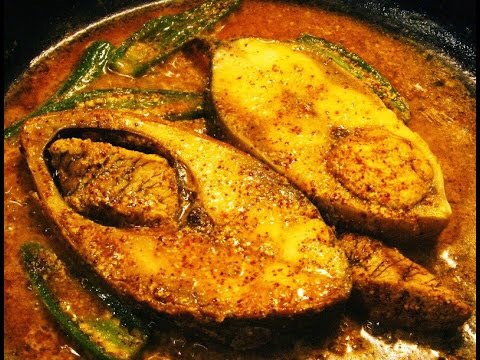
The grand feast finally began. Food was served in decorative polished brass plates and bowls that bounced off light when sun rays fell on them. A small mound of rice in the shape of a cake was placed at the center of a plate, the size of a lotus leaf. A small heap of salt, green chilli, a wedge of sweet smelling lemon and pieces of deep fried golden brown aubergine coated in rice flour lay in one side. Small bowls of curries and lentils of different textures — rich, mild, fiery hot, as well as varied colour palette—red, brown, yellow— circled the plate as satellites around the sun. There were fishes of different shapes, sizes and species—striped small tangra lathered in a dry, spicy sauce, palm-sized pieces of carp fish bobbing in a dark red sauce and baked hilsa wrapped in tender plantain leaves. As Ashim walked to the dining table, the contours of his face changed— he looked in awe at the king’s spread laid out on the table.
“My God, Aunty, why did you take so much pain? I feel bad, I caused you so much trouble,” he said.
“Please, it was a pleasure. It’s a way of saying how happy we are to have you with us. Now enjoy your food,” she said with a warm motherly smile.
As Ashim and his wife talked, Roy’s eyes fell on his daughter. She looked a bit blanched and was unusually quiet. Something in her silence told him that some thing was bothering her. It was hard for him to tell what was going on in her mind. What’s the matter with her? She should look jubilant, now that we have approved her choice, he thought. He decided to find it out after lunch.
He was so busy romancing his food–mixing rice with curry, putting it in his mouth and then letting his tongue enjoy all the flavours before swallowing it—that he didn’t notice that Ashim had finished only a small portion of rice with lentils and vegetables, and the fish curries lay untouched.
“What’s the matter? Aren’t you enjoying the food?” he asked.
“Oh, no, Uncle, it is very good. It is just I am not used to such an elaborate meal.”
“Come on, at this age you should have an appetite of a monster. You should have no problem finishing this off,” he said.
Ashim looked like a child lost in the woods. Roy saw he was highly unskilled when it came to separating bones from the flesh. He picked a few tangra fish from the curry, haphazardly mixed it with rice and forced it down his throat with water as if he was taking some bitter dose of medicine. At one time he started using both his hands, his plate looked like garbage bin with food thrown all over the place. For a connoisseur of fish like him it was a repulsive sight. He lost his appetite; he pushed the plate away from him, got up and walked out of the room without speaking a word. His daughter had kept him in dark; she didn’t disclose to him that Ashim was a non-fish eater. Why did she do that? Did she think he won’t be able to see through the lie? He really wanted to pass on his love of fish to his son-in-law. He had great plans in mind–one day he wanted to take him to the fish market and teach him how to differentiate between a fresh and a stale fish. He wanted to share with him some interesting fish trivia—how the salt content in the water determined the taste of Ilish mach, and many more.
He was sitting on the bed and looking out of the window when his daughter came in and sat beside him. He became stiff as a stick.
“Baba, listen to me. Give me a chance to explain, please,” she said.
He turned around to face his daughter; trying hard to cloak the anguish and hurt he felt profoundly, but it was stamped all over his face.
“Baba, I always wanted to tell you that Ashim is non fish eater. But he told me that if it meant so much to you, he would go ahead and try to eat fish. I knew he would make a mess of it and you would find it out eventually, but he was so keen on pleasing you that I let him have his way,” she said.
“Did you realize how much pain your mother took in preparing all these? Of course, I would have been hurt if you told me about this fact earlier, but I would be prepared. But now I feel insulted; I feel like a fool.”
“We are sorry. I really like this man. And he is a very good human being. I can never be at peace, knowing the fact that I have caused you pain. Give us another chance, please.”
Her complete candour assuaged his anguish somewhat. He knew he had to shed his prejudices and petty thinking as it would be extremely puerile of him if he judged Ashim based on the fact that he was a non fish eater. There was no denying the fact that he was a likeable character, and more importantly his daughter liked him.
“Come Baba, finish your lunch. They are waiting for you.”
“You go and join them. I will be there in a minute.”
As he watched her walk out of the room, he was suddenly transported to the time when she was a baby. She had just learnt to walk; she surveyed the house on her stubby legs, the bells she wore on her ankles, pealing softly. Roy loved to blow raspberries on her butter-soft stomach and watch her wiggle and let out gurgles of laughter. The good old memories brought a smile to his lips. She was still his baby, and he would do nothing to spoil her happiness.
Roy stood up and walked out of the room to join others. He was hungry now, and wanted to tuck into some rice and fish curry.

 Daily Dose of Shilpi