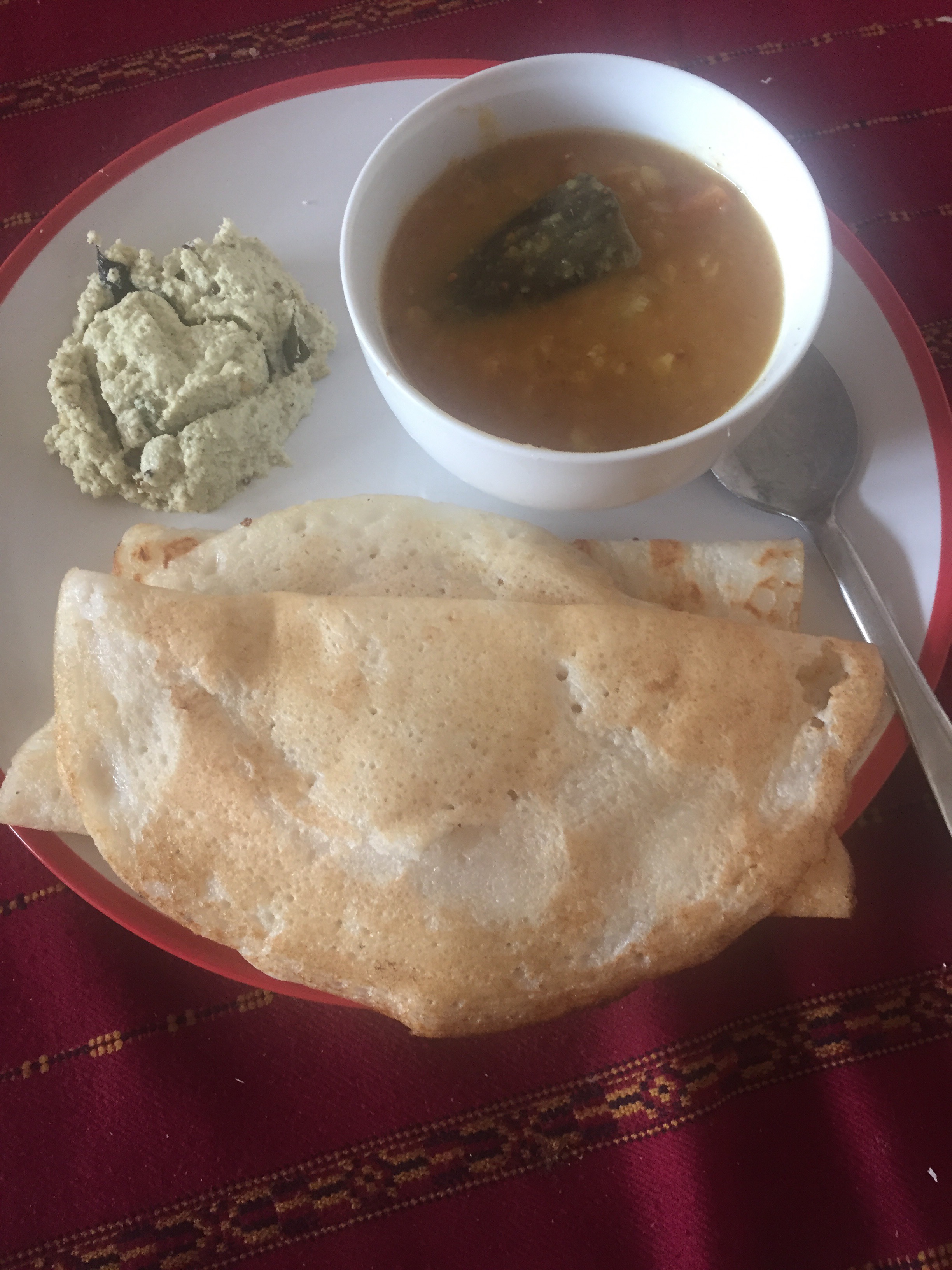
It is said when a Bengali ventures into the kitchen to prepare the ubiquitous South Indian dish, dosa, you can hear lot of pots and pans banging. For them it is like going on a intrepid exotic culinary adventure. I still remember when we first asked Ma if she could make dosa for us, she raised her disbelieving eyebrows. Those were times when the hoi polloi was not very much exposed to other regional cuisines of India. But she had no choice. Ever since her daughters tasted the South Indian staple in some swanky restaurant they couldn’t stop salivating over those golden crispy dosa, the tangy spice sambhar dal, and the buttery smooth coconut chutney. They would badger her again and again, Ma, can we go to Woodlands again, please? “No, you cannot. How rich do you think we are! At last she decided to try making it at home. However, she made it very clear that she would make dosa only for breakfast, a typical Bengali, she couldn’t envision anything else but rice for lunch and dinner. I remember my mother’s jittery excitement as she forayed into this unknown world, something impossible belonging to another place. My mother was never an experimental cook nor did she enjoy cooking but it was her duty to feed her family and hence depended on the tried and tasted recipes passed down to her by her in-laws. She never used a recipe book, she has been cooking for so long that she could make most Bengali dishes even if she was blindfolded. But this seemed a difficult equation. As she went through the recipe step by step, she wrung her hands, wrinkled her eye brows, expressing her annoyance. A hurdle, big enough, was zeroing in on curry leaves, the queen herb in South Indian cuisine. In Bengali food, curry leaves were never used so we had no idea how it looked like. In those days curry leaves were not available easily in our part of the country. The family came together, even the caretaker. He assured us that he could arrange for some curry leaves, there was a curry leaf tree where he worked. The sprigs of curry leaves looked like tej patta( bay leaves) and it’s strong aroma lingered in the air for long. The sweat by the brow preparation started one day before as the trick to get the dosa right was fermentation. Rice and urad dal was soaked in water and kept in a warm place. Then we debated whether to grind the mixture on the stone or in the grinder. But at last we decided to go easy on ourselves use the grinder. With deftness and precision, Ma then took a ladle of batter and spread it out on pan, then she spiralled the ladle until the batter reached the edges. Her lips pursed and face flushed red with heat and concentration as she tried to flip the dosa. Beads of sweat run down her face, but she was too focussed on the task at hand . But the stubborn dosa would not come off the pan, I could see ma’s face, furrows in her brow, jaws clenched, her muscles taut. We realised there was something wrong with the batter, may be it was too thick, may be it was too thin, may be it was not fermented well, who knows? As she forcibly try to take it off the pan, it broke into fragments, dashing all our hopes. Ma stormed out of the kitchen bristling with anger. I am never making dosa again, she said. That day we were served scraps of dosa. It tasted fine. We ate our breakfast without a word, only the the sound of cutlery clinking against the dishes. A pinch of amnesia, and after some days we were trying to flip dosas again. Yes, we could never craft the perfect dosa, but this did not deter us from making dosas. Once in a month, on a weekend, we would again join hands to make dosa.
Now, we get ready made dosa batter, and my dosas come out near perfect. Yet, I would think twice before treating my South Indian friends to my dosas. They might have a seizure. So my dosas are only for my family and my non South Indian friends. I think I can get away with them.


